Key takeaways
- A flat, firm spot with room for the truck is best.
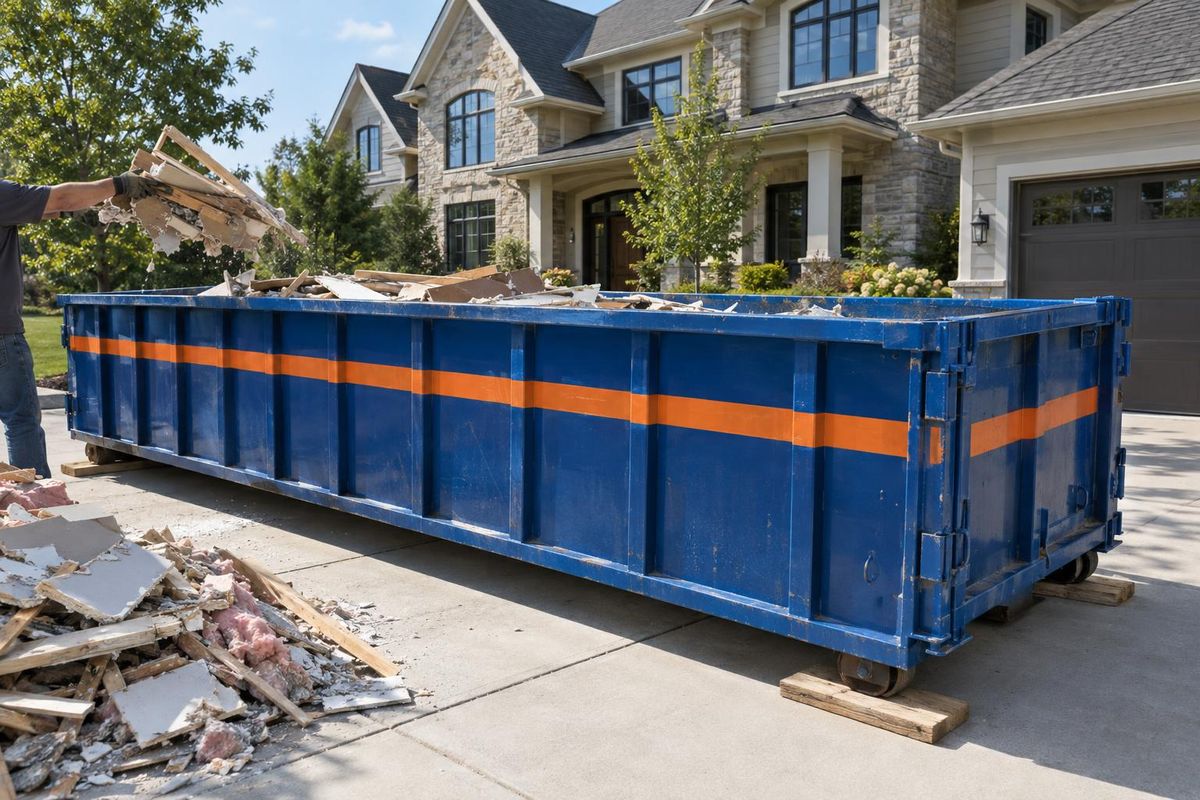
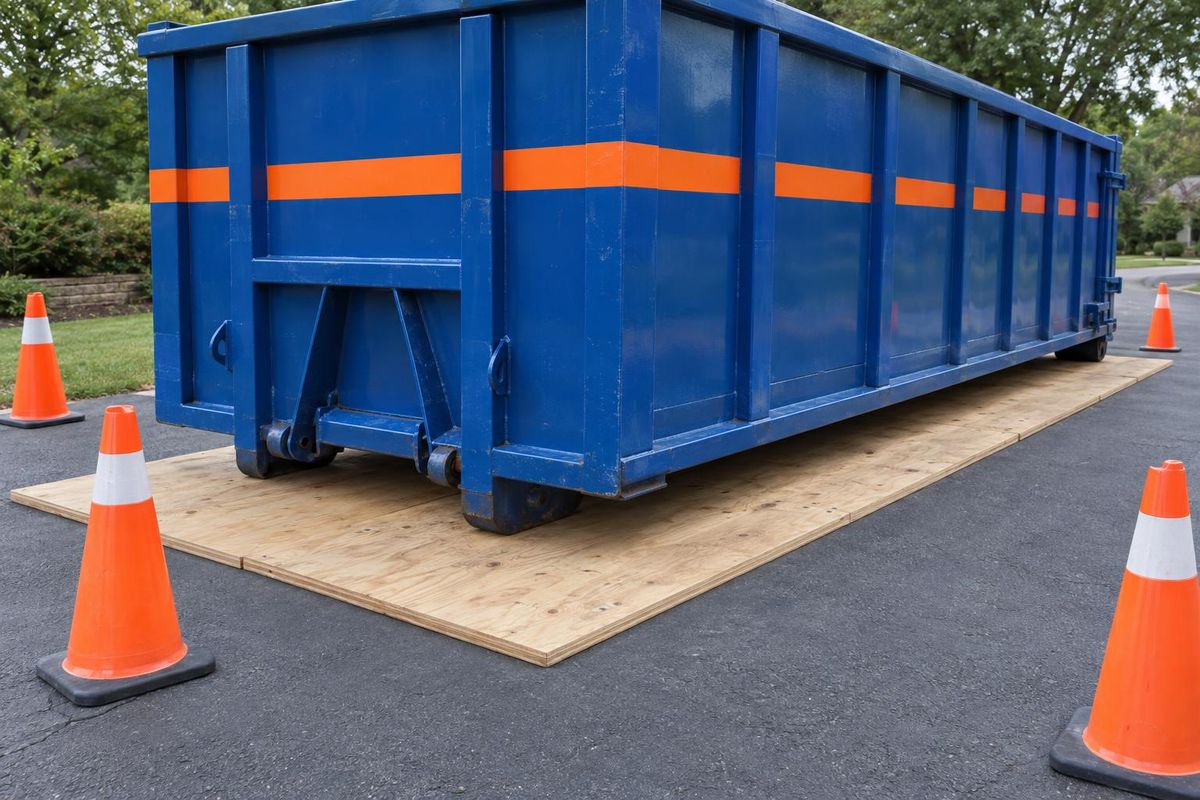
- Boards protect asphalt, concrete and pavers.
- Check overhead lines, trees and gates.
- Street placement rules vary by city; ask your local office.
Pick the spot
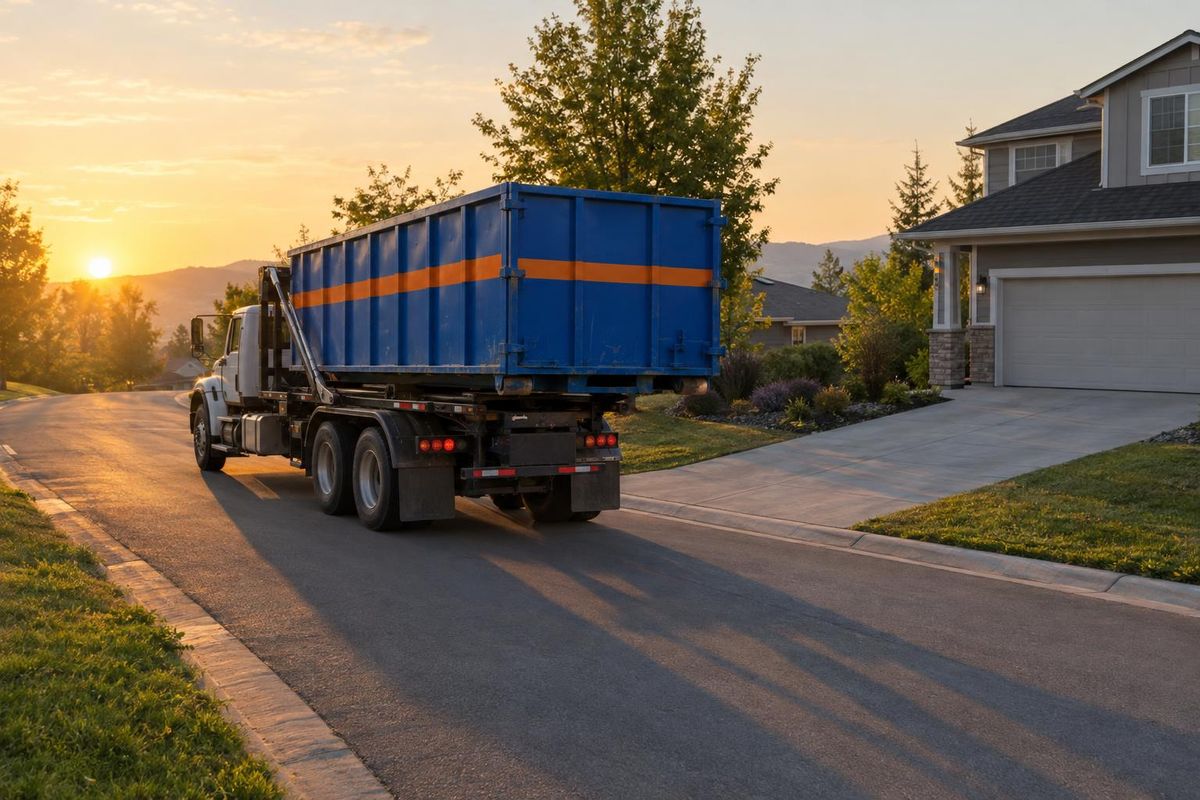
The best spot is flat, firm and close to where you are working. Leave room for the truck to back in, tilt and slide the container off. A good rule is to leave a lot more space than the container itself.
Avoid soft ground, steep slopes and places with low branches or wires.
Protect the surface
Boards under the container spread the weight and help protect asphalt, concrete and pavers. Very old or thin pavement is still a risk, so mention it when you book.
Keep sprinkler heads, septic lines and shallow utilities in mind.
Check the limits
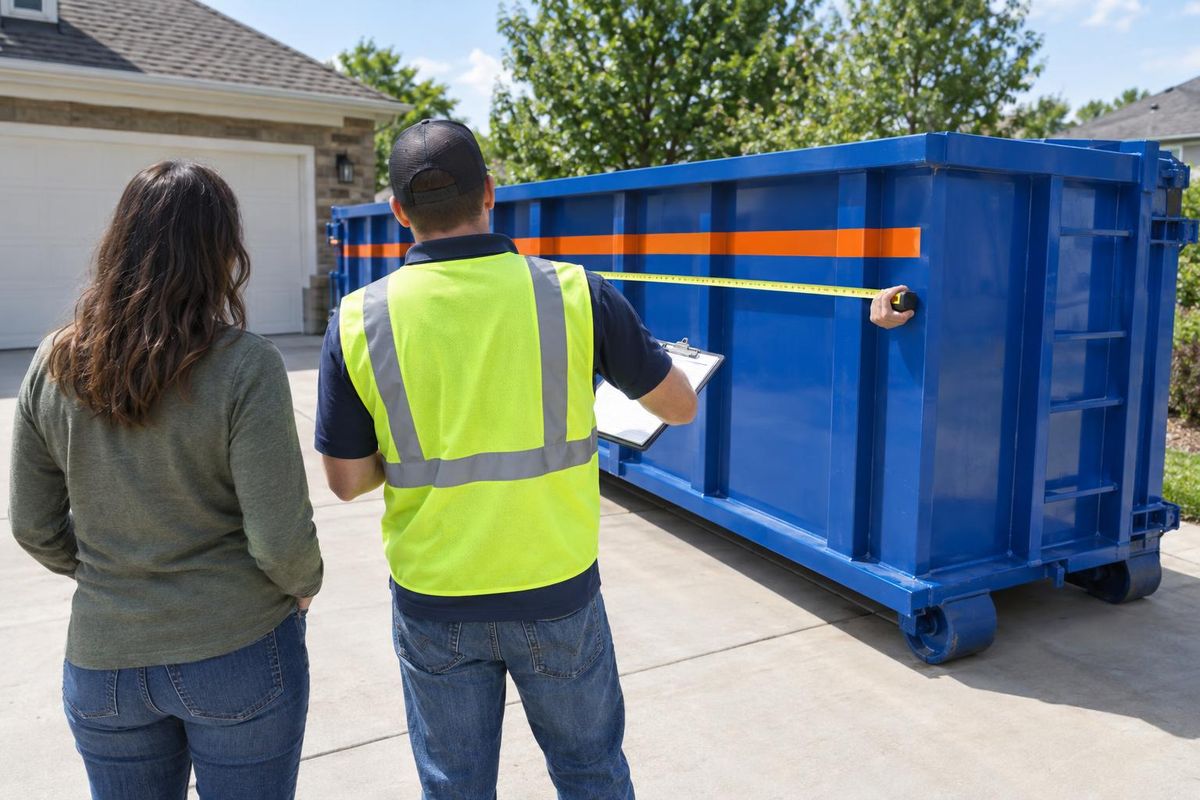
Measure your driveway width and length. Look up for trees and wires. Check for gates and posts the truck must pass.
Send a photo if you are unsure. It helps us plan the delivery.
Streets and permits
Some cities and neighborhoods require a permit or have rules for containers placed on the street. Your HOA may also have rules.
Check with your city or HOA before you book, and tell us what you find out.
Quick answers
Can a dumpster go on grass?
It can, but it may leave ruts. Boards help, and firm, dry ground is much better.
Do I need a permit?
Usually not for a private driveway. Street placement often has rules, so check locally.