Key takeaways
- Match the size to the type of material, not only the amount.
- Heavy debris like concrete belongs in a smaller container.
- If you are between two sizes, size up for light debris and down for heavy debris.
- Placement and driveway size can limit your choice.
Start with what you are throwing away
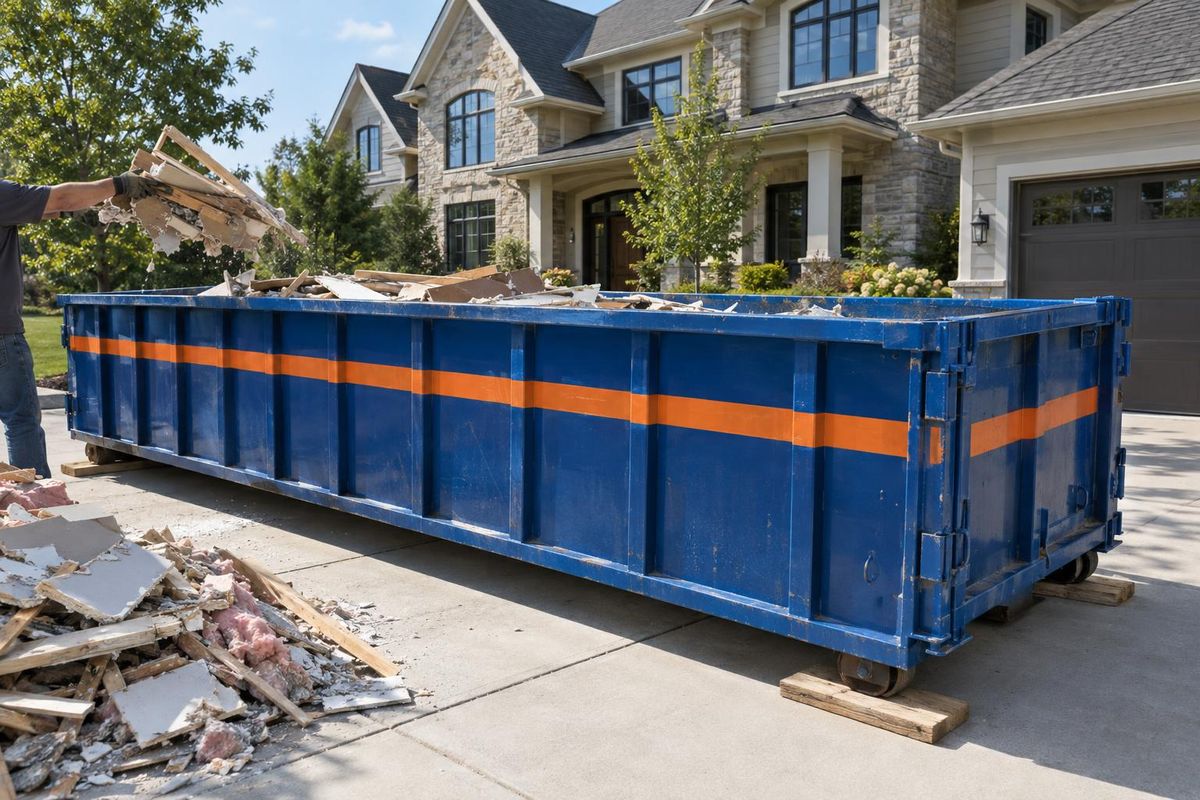
Light and bulky material like furniture, packaging and drywall fills a container by volume, so a larger size makes sense. Dense material like concrete, brick and dirt fills it by weight, so a smaller container is the right pick.
Write down the main materials before you call. It makes the size recommendation much more accurate.
Use the sizes as a rough guide
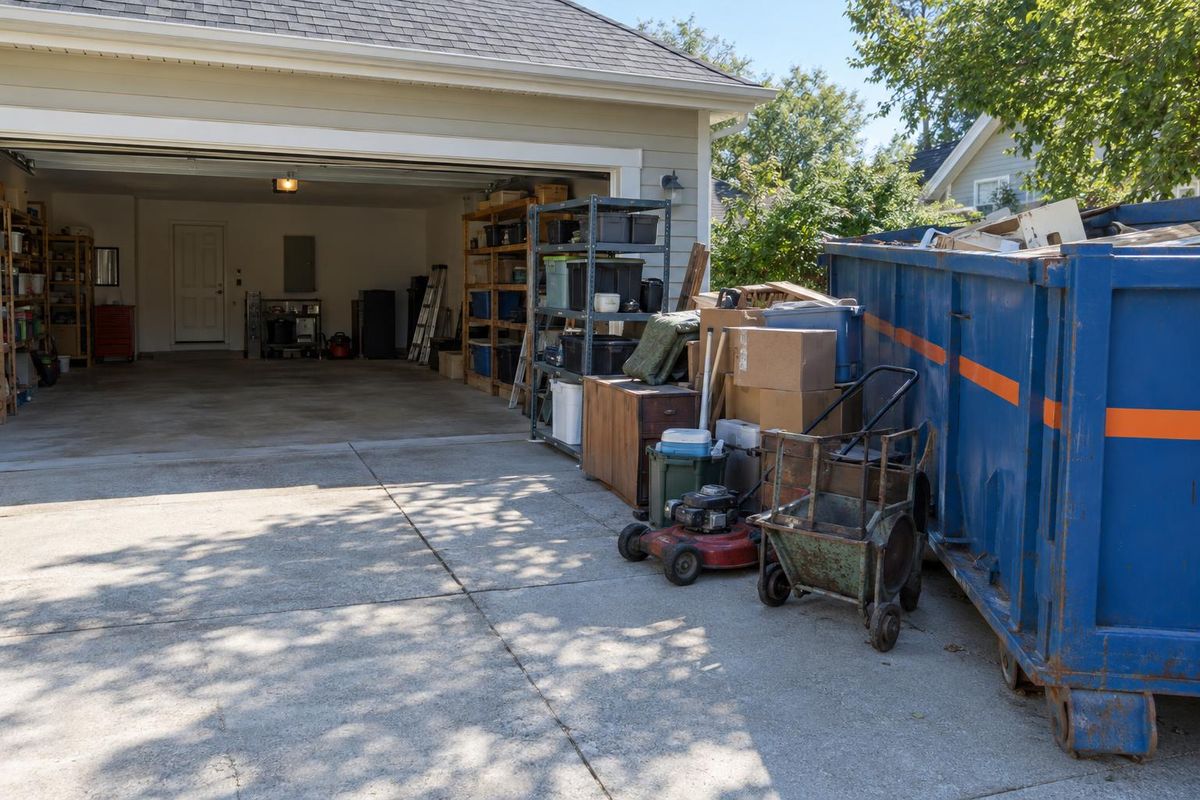
A 10 yard is the compact choice for small cleanouts and heavy loads. A 15 yard handles a kitchen or a garage. A 20 yard is the most popular for whole-house cleanouts and roofs. A 30 yard suits large builds, and a 40 yard is for the biggest commercial jobs.
These are rough guides. Containers vary a little in length and height, and every load packs differently.
Think about where it will sit
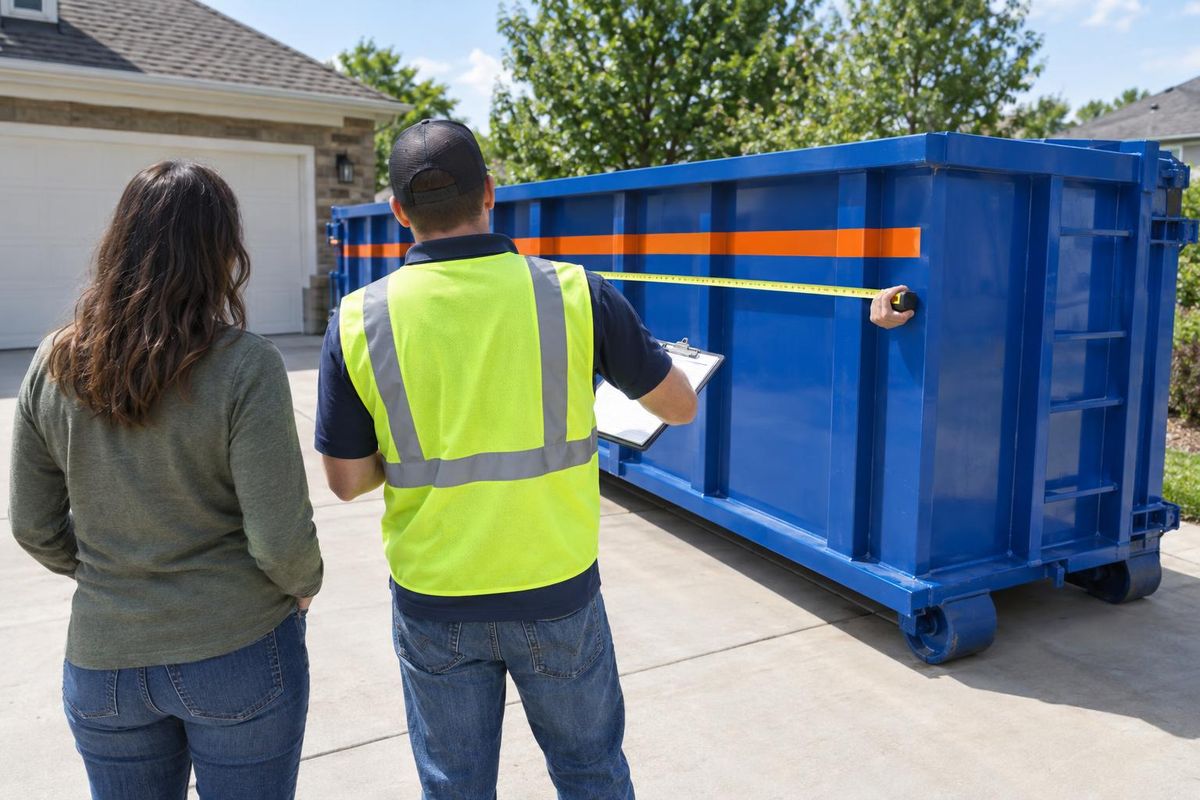
A longer container needs a longer, flatter spot and more room for the truck. Measure your driveway width and length and note trees, wires and gates before you decide.
If space is tight, a smaller container with a swap is often better than a large one that does not fit.
If you are between sizes
For light, bulky debris, choose the larger size so you are not forced into a second haul. For heavy debris, choose the smaller size so you stay under the weight limit.
You can also ask for a recommendation. We would rather help you pick the right box than see you run out of room.
Quick answers
Can I swap to a bigger size after delivery?
Often yes. Call us early and we will see what is available.
Does a bigger container need more room?
Yes. Placement is about space, so check the clearance and the surface before you decide.